Are Open Source Contributions Still Needed in the AI Era?
Open source is more important than ever in the AI era, but the contribution model built on drive-by pull requests is collapsing under AI-generated submissions. The fix is not to close the gates but to redesign how contributions are accepted, verified, and credited.

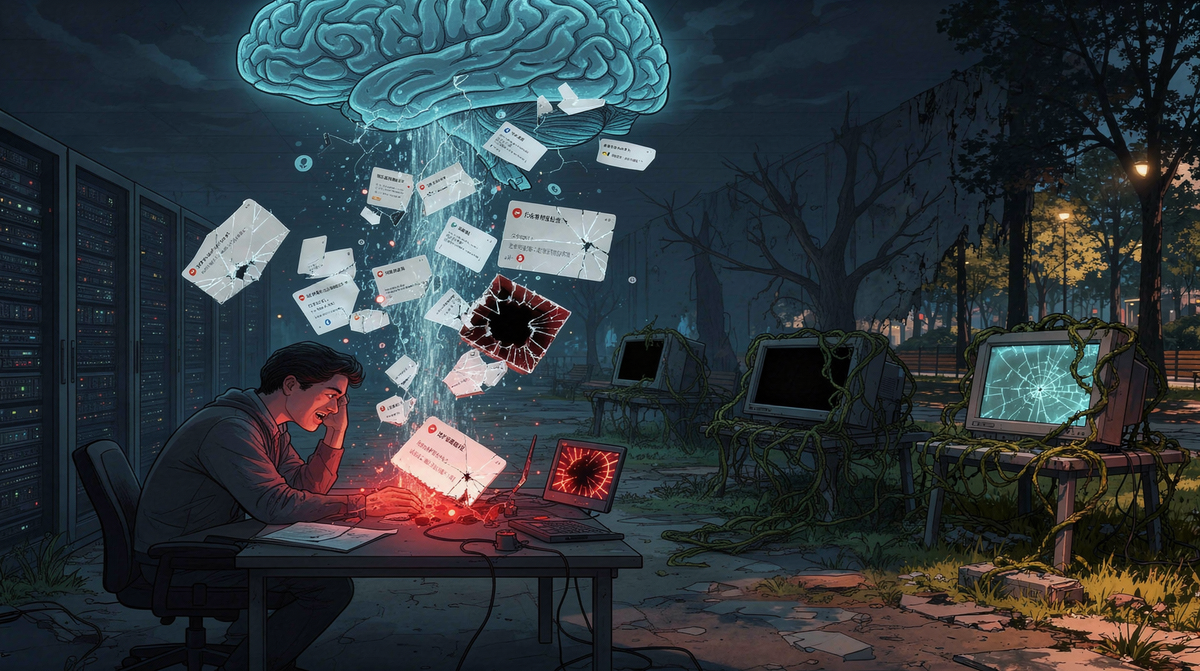
TL;DR: Open source isn't dying, but the contribution model is breaking. Maintainers are drowning in low-quality AI-generated pull requests while the real value of open source (shared trust, security review, collective standards) goes unrecognized. The answer isn't to abandon third-party contributions or have one human plus an AI build everything alone. It's to redesign how we accept, verify, and credit work in a world where writing code is no longer the bottleneck.
I've been watching a quiet crisis play out on GitHub for the past year. Maintainers I respect are posting the same complaint, with slightly different words each time: their inboxes are full of pull requests that look polished, pass linters, and fall apart the moment you actually read them. The author of the PR can't answer basic questions about their own diff. The code solves a problem that doesn't exist. The tests test the wrong thing. This is the AI contribution flood, and it's forcing a hard question.
If one maintainer with Claude or Cursor can ship features faster than a queue of drive-by contributors, why bother accepting outside help at all? Is open source contribution a thing of the past?
My answer, after thinking about this for a while: the contribution model as we knew it from 2008 to 2022 is finished. Open source itself is more important than ever. Those two statements only sound contradictory if you misremember what open source was for in the first place.
The AI-generated PR flood is real, and it's worse than it looks
Let me start with what's actually happening. I've spoken with maintainers of mid-sized projects (think 5k to 50k stars) who report PR volume up 3x to 5x year over year, with merge rates collapsing. One told me his project's merge rate dropped from roughly 60% of incoming PRs in 2023 to under 15% in early 2026. The PRs are not malicious. They're worse than malicious. They're plausible.
A plausible PR is the most expensive thing a maintainer can receive. It looks correct enough that you have to read it carefully. You have to run it. You have to write feedback. And when the contributor disappears or sends back another AI-generated round that misses the point, you've spent two hours on something that should have been closed in two minutes.
This is the new tax on being a maintainer, and a lot of people are quietly stopping paying it.
What open source was actually for
The seductive version of the question is: "Why do I need humans helping me when I have an AI?" That framing assumes the value of a contributor was their labor. It wasn't, not really.
Free labor was always the smallest benefit
If you've ever maintained a library used in production, you know that most third-party PRs cost more time than they save. The economic value of a typical drive-by contribution, after review, revision, CI cycles, and long-term maintenance burden, is often negative. We accepted that cost because contributions came bundled with something else.
Trust, eyes, and shared standards
The real outputs of healthy open source were these:
- Independent review of security-sensitive code by people who didn't write it.
- Distributed knowledge so that no single person was the bus factor.
- Shared standards across organizations, so that React, Postgres, or Kubernetes meant the same thing to everyone using them.
- Trust signals that let companies adopt code without auditing every line.
None of that goes away because AI exists. If anything, every single one of those becomes more valuable when 90% of code is machine-generated and you can't trust the surface appearance of anything.
Why "I'll just build it myself with AI" is a trap
I understand the appeal. You're a maintainer, you're tired, and you can prompt your way to a feature in an afternoon. Why deal with strangers?
Here's what that path actually produces over 18 months:
- Single-author bus factor. Your project now depends entirely on you, your subscription, and your continued interest. The library is one burned-out weekend away from being abandoned.
- No external validators. When someone asks if your crypto library is safe to use in production, the honest answer is "one person and an LLM wrote it." That's not a credential.
- Stagnant problem framing. Outside contributors used to bring use cases you'd never see. AI doesn't bring you new use cases. It accelerates the ones you already have.
- Erosion of the commons. If every maintainer makes this choice, open source becomes a collection of solo projects with no shared review culture. That's not an ecosystem. That's a graveyard with good READMEs.
The "do it alone with AI" strategy optimizes for this quarter and destroys the next decade.
The signal-to-noise problem is the real disease
The AI PR flood isn't a reason to close the contribution gates. It's a sign that our intake systems were designed for a world where writing code was hard. Writing code is no longer hard. Knowing whether code is correct, safe, and worth merging is still extremely hard. The bottleneck moved, and our tooling hasn't caught up.
This is the uncomfortable truth: most open source projects still use a 2015 contribution workflow (open issue, fork, PR, review, merge) in a 2026 world where any teenager can generate a 2,000-line PR in 90 seconds. Of course it's broken.
What contribution should look like now
I think the projects that survive this transition will do a few specific things.
Raise the cost of submission, not the cost of review
Require contributors to write, in their own words, what problem they're solving and why their approach is correct. Not a template they can paste a prompt into. A short design note before any code is reviewed. This filters out the people who can't explain what they shipped, which is exactly the filter that's missing right now.
Make sponsorship explicit
If a PR was substantially AI-generated, fine, but the human submitting it is sponsoring it. They're vouching that they read every line, tested it, and will respond to follow-ups for the next 90 days. If they ghost, their next PR goes to the bottom of the queue. Reputation, not just code, becomes the unit of contribution.
Pay maintainers, finally
The flood has made it obvious that maintainership is real, skilled, taxing work. Companies that depend on these libraries should be paying for review capacity, not extracting it. The economics of "free as in beer, paid for with weekends" was already wrong in 2018. It's insulting in 2026.
Use AI on the review side too
Maintainers can run their own models to triage incoming PRs: classify, summarize, flag obvious issues, check whether the contributor's description matches the diff. If contributors get to use AI, maintainers get to use it on defense. It's not a perfect solution, but it rebalances the asymmetry.
So, is open source contribution a thing of the past?
No. But the version where a stranger drops 400 lines of code into your repo on a Saturday and calls it "giving back" is probably done. That model assumed code was scarce and attention was abundant. Both assumptions are now inverted.
What replaces it is something more deliberate. Smaller circles of trusted contributors. Explicit sponsorship of changes. Paid maintainership for anything load-bearing. Shared review infrastructure across projects. Open source becomes less like a public park and more like a cooperative: harder to join, more valuable to belong to, and far more honest about who's actually doing the work.
The maintainers complaining right now aren't whining. They're sending a signal that the old social contract has expired. We can either redesign it or watch the commons quietly privatize, one solo-with-Claude project at a time.
I'd rather redesign it.
FAQ
Is open source contribution dead in 2026?
No, open source contribution is not dead, but the model of unsolicited drive-by pull requests from strangers is collapsing under AI-generated submissions. Maintainers are receiving 3x to 5x more PRs than in 2023, with merge rates falling below 15% on many projects. The future of contribution is smaller, more trusted, and more accountable, not gone.
Why are maintainers complaining about AI-generated pull requests?
Maintainers complain because AI-generated PRs are often plausible but wrong, which is the most expensive type of contribution to review. Contributors frequently can't answer questions about their own code, can't iterate when feedback is given, and disappear after submission. This shifts the review burden entirely onto maintainers without bringing the trust or domain knowledge that traditional contributors offered.
Can a single maintainer just build everything with AI instead?
A solo maintainer using AI can ship features fast in the short term, but the strategy creates a single point of failure, removes independent code review, and eliminates the external validation that makes open source trustworthy. Within 18 months, projects run this way tend to lose adoption because companies won't depend on code that no one but the author has audited.
What should open source projects do about the AI PR flood?
Projects should raise submission costs by requiring contributors to explain problems and approaches in their own words before code review, treat human submitters as sponsors who vouch for AI-generated diffs, deploy AI on the review side to triage incoming PRs, and push for paid maintainership funded by the companies that depend on the code.
Does AI make open source more or less important?
AI makes open source more important, not less. When most code can be machine-generated and surface appearance can't be trusted, the value of independent review, shared standards, and distributed trust goes up sharply. What changes is the contribution model, not the underlying need for open, audited, collectively maintained software.
Local AI Playground
Real AI models running entirely in your browser. Your GPU, your data — nothing sent to a server.
Try it free